Medicare Advantage (MA) is a government-sponsored program offering an alternative to fee-for-service (FFS) Medicare, where benefits are provided to Medicare beneficiaries by private health plans, otherwise known as Medicare Advantage organizations (MAOs). This paper discusses a specialized type of MA plan called an institutional special needs plan, or an I-SNP, and highlights four key takeaways in the 2026 market:
- I-SNP enrollment continues to rise despite a decrease in the number of I-SNPs offered from 2023 through 2026.
- Most I-SNPs offer premiums at or below the low-income premium subsidy amount (LIPSA), allowing low-income beneficiaries to enroll in these plans without paying a member premium.
- National and regional MAOs offering I-SNPs differ significantly in their mandatory supplemental benefit coverage and combined benefit coverage.1 Some benefits are offered more frequently by national MAOs, while others are offered more frequently by regional MAOs.
- Special supplemental benefits for the chronically ill (SSBCI), which are available to members with certain chronic conditions, are a common offering by regional MAOs, and the prevalence of combined benefit packages is also growing for regional MAOs.
What are I-SNPs?
I-SNPs are MA plans that enroll beneficiaries who need or are expected to need the level of services provided in a long-term care (LTC) facility for 90 days or more, such as a skilled nursing facility (SNF), nursing facility (NF), intermediate care facility for individuals with intellectual disabilities (ICF/IDD), or an inpatient psychiatric facility.2
An I-SNP must be designated as one of the following three subtypes:
- Institutional (facility) plans offer coverage to beneficiaries living in LTC facilities, such as those listed above. In this paper, we refer to these plans as institutional only.
- Institutional equivalent (living in the community) plans offer coverage to beneficiaries who do not live in an LTC facility but rather live in the community (such as at home or in an assisted living facility). These beneficiaries must still require an institutional level of care to be eligible to enroll. Institutional equivalent plans are sometimes referred to as IE-SNPs. In this paper, we refer to these plans as institutional equivalent.
- Institutional (facility) and institutional equivalent (living in the community) plans offer coverage to beneficiaries residing in both facilities and in the community. In this paper, we refer to these plans as institutional or institutional equivalent.
Throughout this paper, the term I-SNPs refers to all three of these plan types.
I-SNP market landscape and growth
I-SNPs are a relatively small MA market segment. There are 156 I-SNPs in 2026 relative to 5,555 total individual MA plans nationwide, and the average county with at least one I-SNP has two to three I-SNP offerings in total.3 Figure 1 displays the count of I-SNPs by institutional plan type from 2023 to 2026, as well as the number of MAOs offering I-SNPs over this same time period.
Figure 1: Count of I-SNPs by institutional plan type and count of MAOs offering I-SNPs, 2023-2026
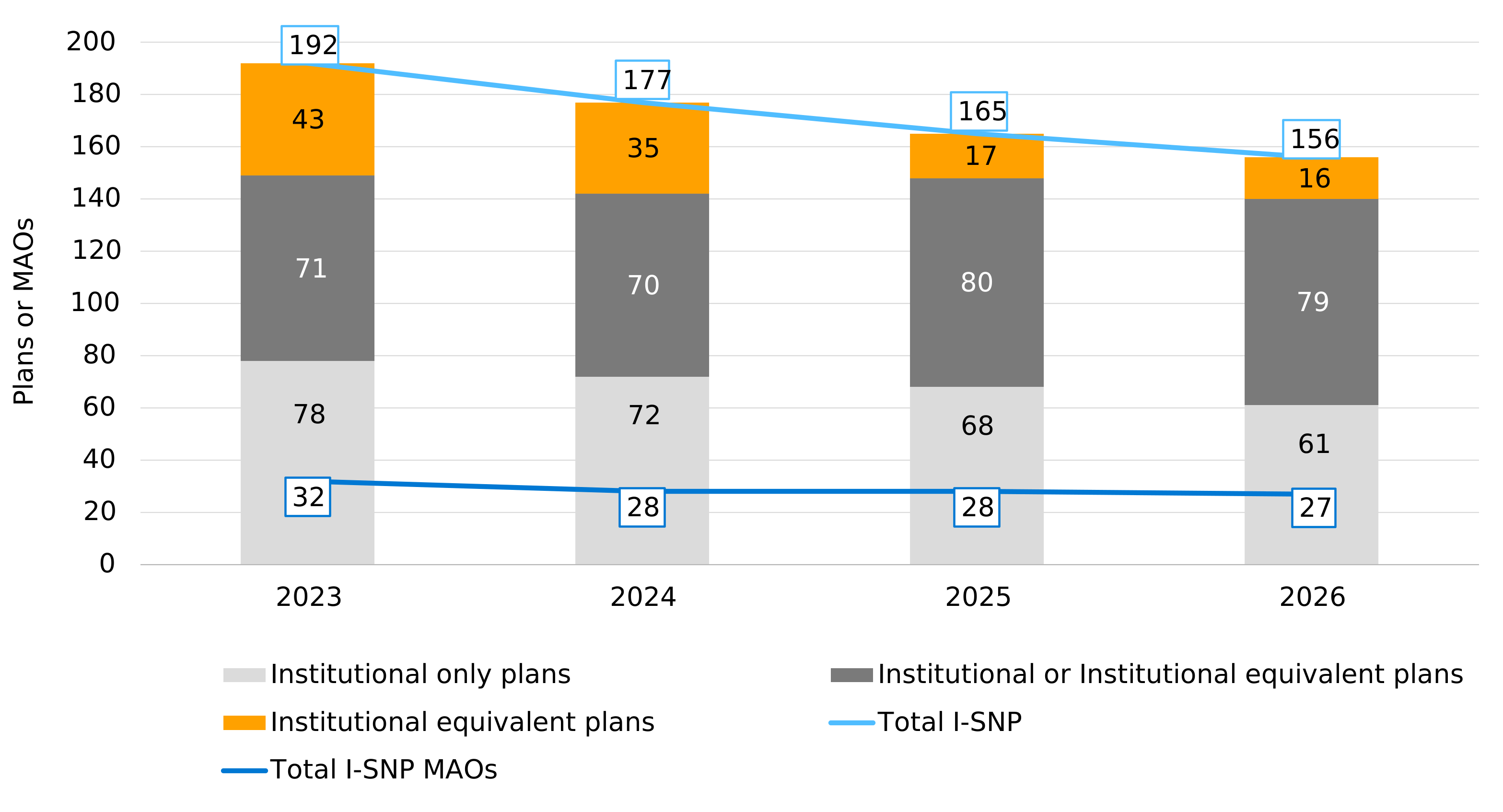
The total number of I-SNPs has been decreasing since 2023. The decrease is driven by the institutional equivalent and institutional only categories, which were collectively reduced by 44 plans from 2023 to 2026. These types of I-SNPs are more restrictive in their enrollment populations, while the institutional or institutional equivalent category allows for the broadest I-SNP enrollment. Most of the plans dropped during this time belonged to national organizations, and we refer to these plans as national I-SNPs in this paper. New I-SNPs were added in each year, mostly by regional organizations, but these were outpaced by dropped plans.
The number of MAOs offering I-SNPs decreased from 2023 to 2026. From 2023 to 2024, four regional carriers exited the I-SNP market. From 2024 to 2025, there were no entrants or exits. From 2025 to 2026, one regional carrier exited the I-SNP market. There have not been any new entrants to the I-SNP market since 2023.
Figure 2 displays I-SNP enrollment by institutional plan type from 2023 to 2026.
Figure 2: I-SNP enrollment by institutional plan type, 2023-2026
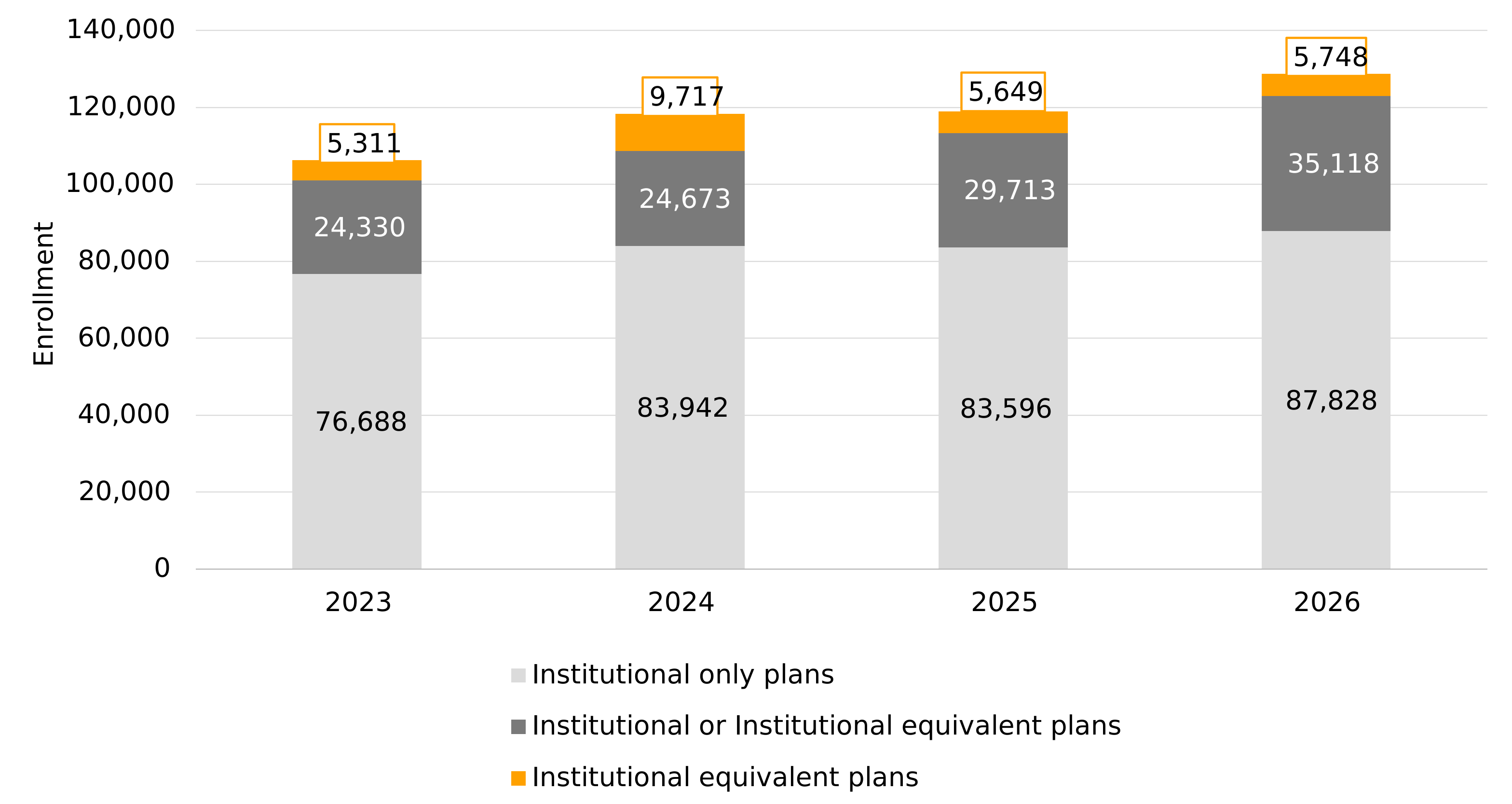
I-SNP enrollment continues to rise despite a drop in the number of plan offerings, with nearly 7% annualized total enrollment growth year-over-year from 2023 to 2026. Institutional only plans are the largest enrollment segment but experienced a slower growth rate than institutional or institutional equivalent plans, which have experienced about 13% year-over-year enrollment growth from 2023 to 2026. Enrollment in institutional equivalent plans surged in 2024 but fell in 2025, driven by one large national carrier that dropped many of these plans in 2025. Some members in the dropped plans may have moved into institutional or institutional equivalent plans based on the enrollment growth observed for this plan type in 2025.
I-SNP enrollment is growing more rapidly in rural areas than urban areas. Rural I-SNP enrollment outpaced urban I-SNP enrollment from 2023 to 2026, with a rate of about 13% rural relative to 4% urban. The majority of I-SNP enrollment remains in urban areas, but enrollment shrunk from 72% to 66% of total I-SNP enrollment from 2023 to 2026 due to more rapid growth in rural areas.
Figure 3 displays 2026 I-SNP enrollment by organization.
Figure 3: I-SNP enrollment by organization, February 2026
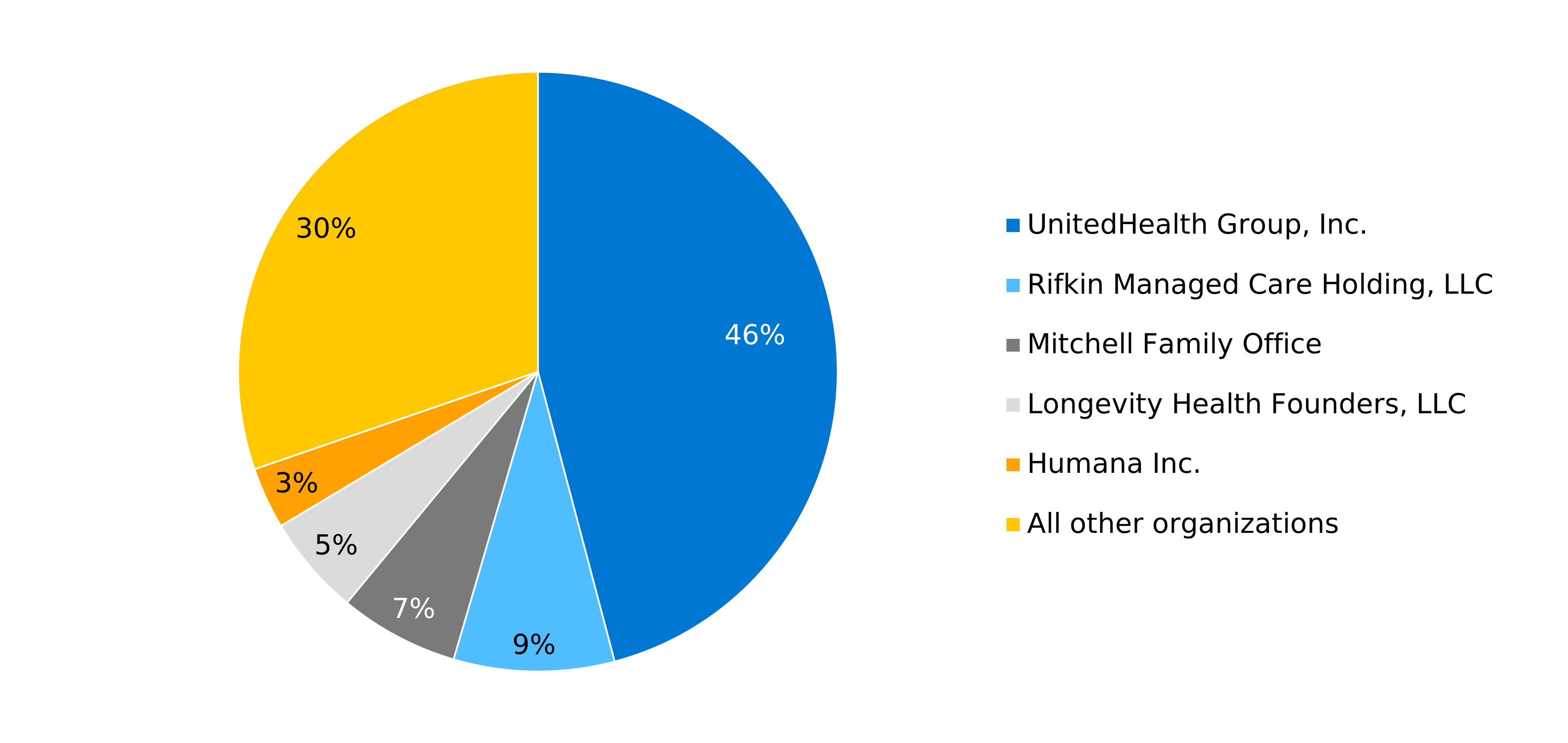
UnitedHealth Group is the largest organization in the I-SNP market. Their share of the market, however, has fallen from 57% in 2023 to 46% in 2026, mainly due to fewer plan offerings. Growth in the I-SNP market is driven by regional organizations adding new plans and experiencing growth in existing plans. The majority of I-SNP organizations experienced enrollment growth in 2026.
The all other organizations category contains 22 organizations, all with 3% market share or less. The I-SNP market is made up of many organizations with a relatively low number of beneficiaries.
I-SNP member premiums
Some MA plans charge a monthly premium to their beneficiaries. For low-income beneficiaries, the federal government covers the Part D member premium up to the LIPSA, which varies by region and is set by the Centers for Medicare and Medicaid Services (CMS) each year. Plans targeting low-income beneficiaries tend to set premiums equal to or less than the LIPSA, thereby providing coverage at no cost to the beneficiary.
Figure 4 displays 2026 I-SNP member premiums by institutional plan type in relation to the LIPSA. We use $0 premiums and the LIPSA as break points in this analysis.
Figure 4: 2026 I-SNP member premiums by institutional plan type
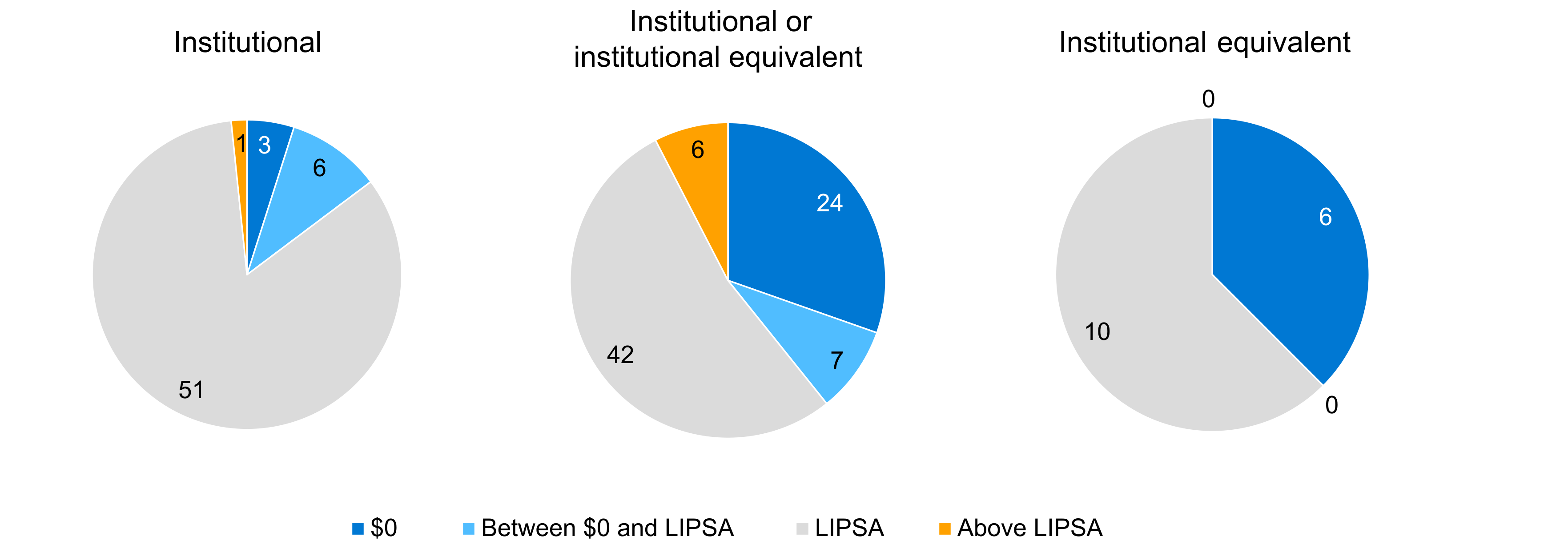
Most I-SNPs target premiums equal to the LIPSA, but many offer lower premiums.
- Institutional only plans tend to enroll primarily low-income beneficiaries, and thus only one plan set its premium above the LIPSA in 2026. Institutional only plans are the least likely to offer premiums below the LIPSA, which reduces the plan’s premium revenue without offering any benefit to low-income beneficiaries. We note that some of the plans offering premiums between $0 and the LIPSA likely intended to set their premium equal to the LIPSA, but their projected Part D liability was not high enough to do so. This has become a more common occurrence with the restructuring of the Part D benefit under the Inflation Reduction Act (IRA).
- Institutional or institutional equivalent plans are the most diverse in their premium strategies, with plans offering premiums at all levels.
- No institutional equivalent plan premiums were above the LIPSA in 2026. These plans either target the LIPSA or offer a $0 member premium.
I-SNP supplemental benefits
MA plans typically offer additional benefits not provided under traditional Medicare, referred to as supplemental benefits. This discussion focuses on mandatory supplemental benefits and excludes optional supplemental benefits, for which each individual beneficiary within a plan can elect optional supplemental coverage and pay an additional premium. Figure 5 displays the percentage of I-SNP beneficiaries with coverage for dental, vision, and hearing benefits in 2026 split between national and regional MAOs. For this analysis, we classified CVS, Elevance, Humana, and UnitedHealthcare as national MAOs in the 2026 I-SNP market. We classified all other MAOs as regional carriers.4
Figure 5: 2026 dental, vision, and hearing benefit coverage by national and regional I-SNPs
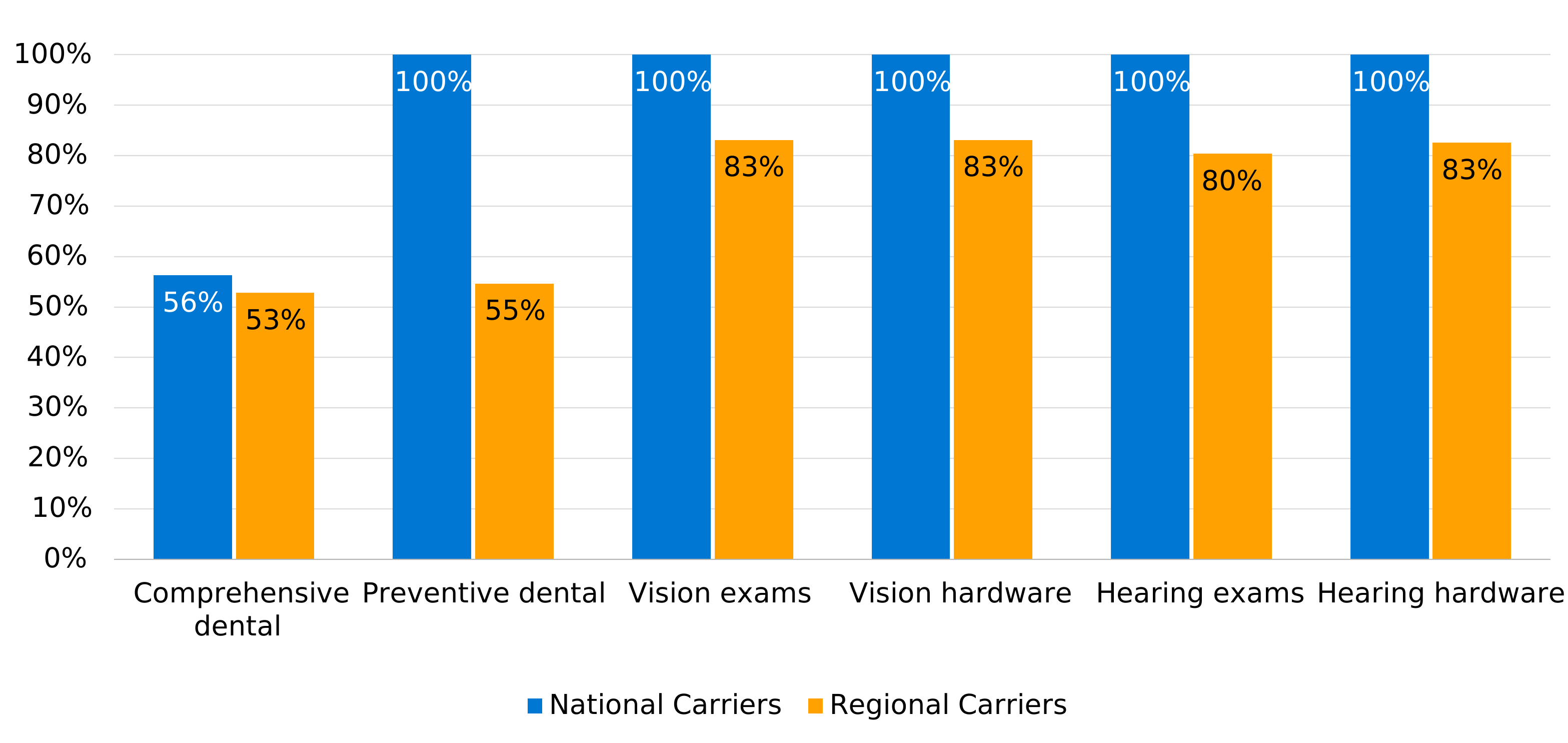
All beneficiaries enrolled in national I-SNPs in 2026 have preventive dental, vision, and hearing coverage, with regional I-SNPs covering these benefits less frequently. The national I-SNPs appear to mirror the general MA market, where preventive dental, vision, and hearing are covered by nearly all plans.
Comprehensive dental coverage in the I-SNP market has dropped significantly in 2026, especially among national carriers, and now more closely mirrors regional plans. National carriers offered comprehensive dental to 98% of I-SNP beneficiaries in 2025, and this dropped to 56% in 2026. This shift is driven by UnitedHealthcare, which dropped comprehensive dental coverage on many of their plans in 2026. Coverage dropped from 57% in 2025 to 53% in 2026 among regional carriers for comprehensive dental. There remains a significant difference in preventive dental coverage between national and regional organizations. Lower dental coverage in regional I-SNPs may be due to more customized benefit designs at the facility or regional level than national MAOs offer. For example, some institutional facilities offer dental services through other vendors, and I-SNPs targeting beneficiaries in those facilities do not offer dental coverage because it would be duplicative. Additionally, some I-SNPs may not offer dental coverage because dental coverage is provided by the state Medicaid program. From a marketing perspective, however, beneficiaries may find national I-SNP coverage of dental, vision, and hearing more attractive.
Figure 6 shows the percentage of beneficiaries with coverage of other supplemental benefits most frequently offered by I-SNPs, again split between national and regional I-SNPs.
Figure 6: 2026 coverage of other common supplemental benefit coverage by national and regional I-SNPs
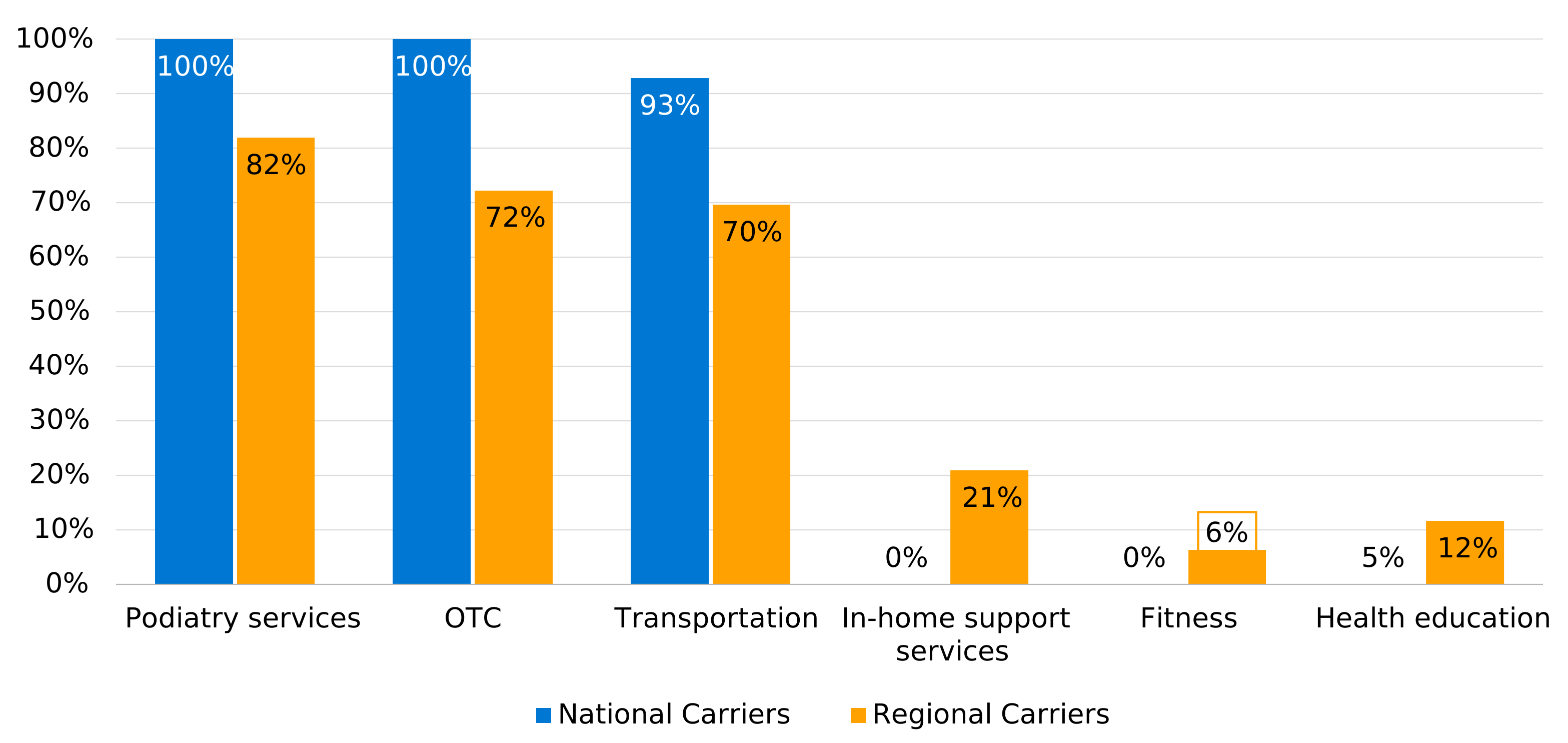
National I-SNPs offer podiatry and over-the-counter (OTC) drug card to 100% of beneficiaries in 2026, again mirroring the general MA market. Transportation is also widely offered by national organizations, with 93% prevalence. Regional I-SNP coverage of these benefits is lower, ranging from 70% to 82%.
Beneficiaries enrolled in regional I-SNPs are more likely to have in-home support services, fitness, and health education benefits than those in national I-SNPs. Regional I-SNPs appear to take a more tailored approach with their supplemental benefits than the national I-SNPs, which focus on the same supplemental benefits as the general MA market. Regional I-SNPs may have a closer relationship with their beneficiaries due to serving a much smaller group of individuals in specific areas or facilities, which allows them to deeply understand the needs of their beneficiaries and design benefit packages most in line with those needs. Additionally, regional I-SNPs are often co-owned by the facilities where the beneficiaries reside, giving the plan greater access and control over the management and administration of these benefits within the facility than a national MAO would have.
The prevalence of combined benefit packages has shifted in the I-SNP market in recent years to include increased offerings by regional organizations. Combined benefits, or combo benefits, are designed to include multiple supplemental benefits in one package and may have a total dollar limit across all benefits in the package. While shared preventive and comprehensive dental limits, shared vision exams and hardware limits, and shared hearing exam and hardware limits fall into the combo benefit category when filed in the plan benefit package (PBP), we do not include them in this discussion. Instead, we focus on true combo benefits, which include multiple types of unrelated benefit types. In 2024, combo benefits were almost exclusively offered by national I-SNP organizations. In 2026, both regional and national I-SNP organizations offer combo benefits, with about 48% of plans offering at least one true combo benefit. I-SNPs with combo benefits frequently include an OTC card paired with other benefits, such as transportation, home and bathroom safety, fitness, OTC hearing aids, or SSBCI.
I-SNP SSBCI offerings
Through benefit flexibilities known as uniform flexibility (UF) and SSBCI, MAOs can provide reduced cost sharing or additional supplemental benefits for enrollees based on condition. Only one I-SNP offers UF in 2026, so we focus our discussion on SSBCI.
Of beneficiaries enrolled in regional I-SNPs, 52% have SSBCI coverage in 2026, relative to only 17% of beneficiaries in national I-SNPs. These benefits are a key focus for regional plans and may make them more attractive to beneficiaries than large national competitors.
I-SNPs offering SSBCI tend to list many qualifying chronic conditions, seemingly with the goal of providing these benefits to the largest possible subset of their plan’s population. Individuals requiring an institutional level of care may be more likely to have at least one chronic health condition than the general MA population, so plans may be able to qualify most of their beneficiaries to receive SSBCI through this approach.
Figure 7 shows the most common SSBCI offered by I-SNPs in 2026.5
Figure 7: Count of 2026 I-SNPs with most common SSBCI offerings
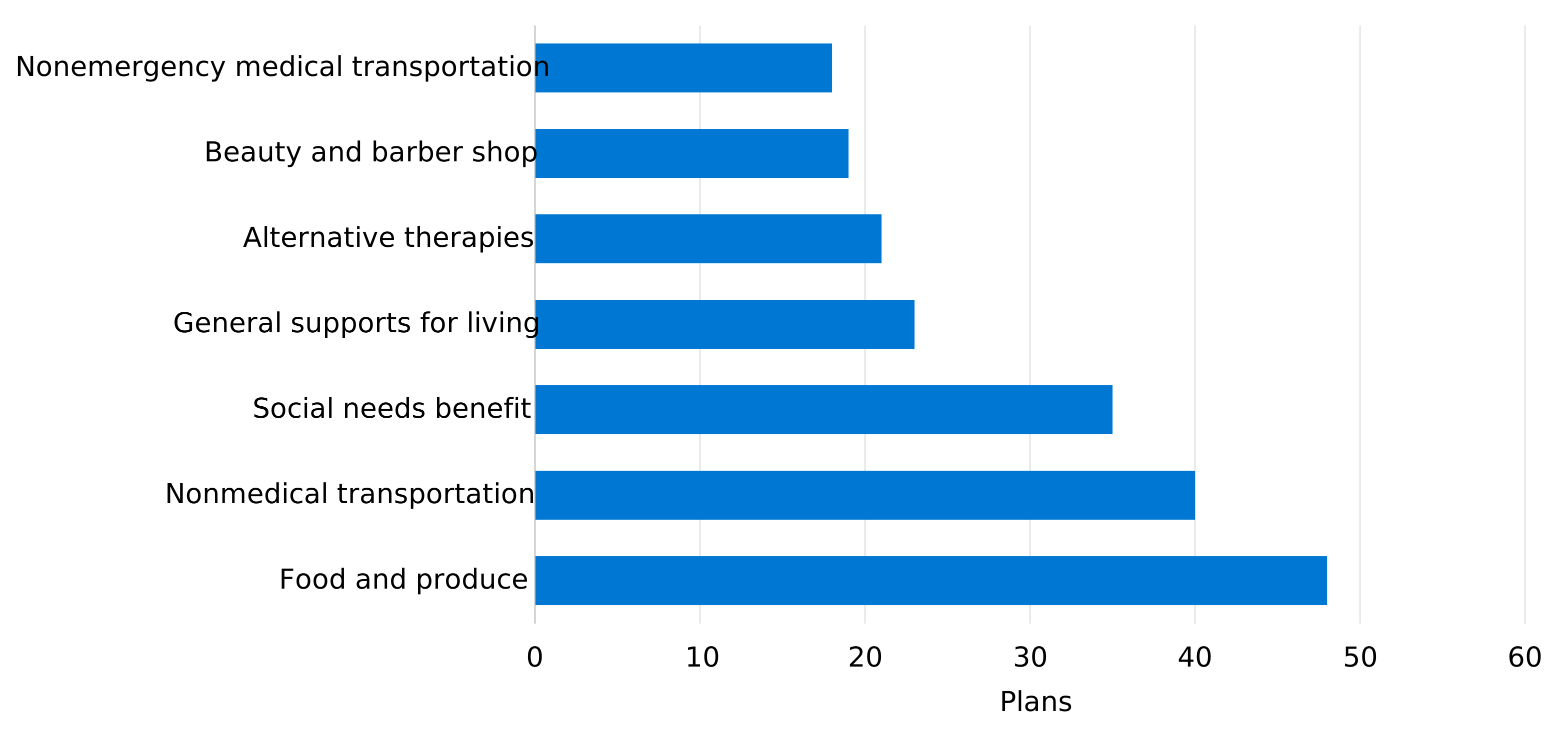
Food and produce is the most frequently offered SSBCI by I-SNPs in 2026, followed by nonmedical transportation and social needs benefit. The growth of food and produce has likely been influenced by I-SNPs that enroll mainly dual-eligible beneficiaries and thus are competing with D-SNPs. D-SNPs tend to offer attractive food and produce benefits. While individuals in facilities generally receive all of their meals in the facility, they may enjoy the flexibility and independence of using a food and produce benefit to purchase additional meal or snack items.
Plans can offer custom SSBCIs, as evidenced by the beauty and barber shop benefit in Figure 7, which is not a standard option in the MA PBP. This is an example of a benefit designed to meet a very specific need among the I-SNP population. Other custom SSBCI offerings observed in 2026 for I-SNPs are personal hygiene items, memory support items, and advanced care at home.6
Bid considerations for 2027 and beyond
- Regulatory implications: In the CY 2027 Advance Notice, CMS proposed new Part C and Part D risk score models. While these models contain multiple changes, new coefficients on hierarchical condition categories (HCCs) more prevalent in the institutional population are resulting, on average, in an increase in institutional risk scores. If the models are finalized, this may be a revenue tailwind for I-SNPs. Plans may consider using this additional revenue to enhance benefits for members. I-SNP organizations should assess the potential impact on their own plans of the new models using information available on the Health Plan Management System (HPMS) website.
- CMS focus on dual enrollment: In the CY 2027 Proposed Rule, CMS issued a request for information regarding I-SNPs and C-SNPs (chronic condition SNPs) with high concentrations of dual enrollment. CMS cites concerns that these plans could be bypassing the stricter integrated care requirements of D-SNPs, such as state Medicaid agency contracts (SMACs). CMS is exploring changes for I-SNPs and C-SNPs, which could include requiring SMACs or establishing stricter care coordination requirements for dual enrollments. I-SNP organizations should watch this developing situation closely and be prepared to respond to new plan requirements.
- Pressure from D-SNPs: Many low-income institutional beneficiaries are eligible for both Medicare and Medicaid and thus eligible to enroll in D-SNPs. These plans tend to offer richer supplemental benefits, including high OTC benefit card limits or food and utilities allowances.7 These benefit packages may entice institutional members away from I-SNPs, placing additional strain on I-SNP enrollment. To combat this, I-SNPs should highlight how their institutional model of care is well-suited to the care coordination of institutional beneficiaries and, for some institutional plan types, how their benefits are tailored specifically to members residing in facilities. They should also understand the benefit designs of competing D-SNPs in their areas when making benefit decisions and marketing their plans.
- Market growth and competition: I-SNPs are likely to remain a relatively small portion of the MA market in the near term, but year-over-year enrollment increases indicate there are still growth opportunities available in this space. Understanding beneficiary needs and offering tailored benefit packages are key for regional players to effectively compete with their large national counterparts.
Methodology
To perform these analyses, we relied on detailed information on MA benefits, premiums, and enrollment as released by CMS and summarized in the 2026 Milliman Medicare Advantage Competitive Value Added Tool (Milliman MACVAT®), which is available for external license. Enrollment used to calculate weighted averages is from February of each year. We also relied on the U.S. Census Bureau to distinguish between urban and rural county indicators.8
The data above was summarized and analyzed in the following groupings:
- Plan type
- Regional versus national organizations
- National MAOs in the 2026 I-SNP market are CVS, Elevance, Humana, and UnitedHealthcare. The other organizations in the I-SNP market are regional.
This analysis excludes all MA SNP types other than I-SNPs. References to the total individual MA market exclude cost plans, medical savings account (MSA) plans, employer group waiver plans (EGWPs), program of all-inclusive care for the elderly (PACE), and prescription drug plans (PDPs).
Caveats, limitations, and qualifications
- The information in this paper is intended to describe changes and trends in the Medicare institutional special needs plan market. It may not be appropriate and should not be used for other purposes.
- We relied on publicly available enrollment and premium data from CMS and the Milliman MACVAT to support the data and conclusions presented in this paper. If this information is incomplete or inaccurate, our observations and comments may not be appropriate. We reviewed the data for reasonability but did not audit the data.
- The credibility of certain comparisons provided in this paper may be limited, particularly where the number of plans in certain groupings is low. Some metrics may also be distorted by premium and benefits in a few plans with particularly high enrollment. Future I-SNP experience may differ from the historical results presented in this paper.
- Mary Yeh is a member of the American Academy of Actuaries and meets the qualification standards of the American Academy of Actuaries to render the actuarial opinion contained herein.
1 The Methodology section describes the distinction between national and regional MAOs.
2 CMS. Institutional special needs plans (I-SNPs). Retrieved January 31, 2024, from https://www.cms.gov/medicare/enrollment-renewal/special-needs-plans/institutional .
3 When referring to the total individual MA market, we exclude cost plans, medical savings account (MSA) plans, employer group waiver plans (EGWPs), the program of all-inclusive care for the elderly (PACE), and prescription drug plans (PDPs).
4 We classified national MAOs as those with over 500,000 members. The other three national MAOs are Centene, Cigna, and Kaiser, which do not offer any I-SNPs.
5 For CMS’s description of SSBCI offerings, see: Coleman, K. (April 19, 2019). Implementing supplemental benefits for chronically ill enrollees. U.S. Department of Health & Human Services. Retrieved March 11, 2026, from https://www.cms.gov/medicare/health-plans/healthplansgeninfo/downloads/supplemental_benefits_chronically_ill_hpms_042419.pdf .
6 These benefits are custom offerings, and thus no official definitions of the covered services are available.
7 Friedman, J.M. & Yeh, M. (January 16, 2024). State of the 2024 Medicare Advantage industry: Dual-eligible plan valuation and benefit offerings. Milliman white paper. Retrieved February 1, 2024, from https://www.milliman.com/en/insight/state-of-the-2024-medicare-advantage-industry-dual-eligible .
8 U.S. Census Bureau. (August 4, 2023). Delineation Files. Retrieved February 1, 2024, from https://www.census.gov/geographies/reference-files/time-series/demo/metro-micro/delineation-files.html .